


Ventilation
Systems

When it comes to ventilation systems, it is the name of a set of systems that have a very wide application area. They are generally divided into two as forced and natural ventilation.
Forced ventilation, as its name suggests, is the forced displacement of air by means of a device. This process is done by using fans that work with a motor called an aspirator and a ventilator. Today, there are many models and types of these systems.
Natural ventilation is a ventilation method that uses the heat exchange of the air through vents without any force.
While applying these ventilation methods, if we filter the incoming and outgoing air with various methods and change its temperature and humidity levels, this process is called air conditioning . These devices are called air conditioning units.


Air Conditioning Units
The most preferred system among ventilation systems is mechanical, or forced ventilation; It allows fresh air to enter while discharging bad air. Both of these movements are provided by a special system. Fans are used for this. Fans have more than one task. First, it sucks in fresh air from the outside. After that, the air goes through a series of processes according to the desired conditions inside, such as filtration, humidification, heating or cooling. During this process, it is possible to make the necessary temperature changes according to the demand. After the air is cleaned here, it becomes suitable for the interior. The air passing through extremely special and durable channels that are also completely leak-proof is distributed into the environment. The other fan in the system is used for discharge. This is called an exhaust fan. At this point, it is necessary to prevent the heat from being discharged outside with the dirty air heated or cooled inside. In this case, a heat recovery system is necessary and used. Thus, air that may pose a problem for human health is discharged from the environment. The striking point here is that heat can be recovered. This rate can be up to 85 percent in residences. When viewed from this perspective, the current system is quite functional.
Aspirators
Devices that suck in unwanted polluted air from the environment and throw it out are called aspirators. They can be made in various models according to the conditions of use. They can be used for many purposes, from WC bathroom ventilation to taking in and throwing out oily air in kitchens, to evacuating smoky, toxic acidic gases and air in industrial facilities. In determining your needs, we can offer the most suitable alternative offers free of charge with our engineer staff, both for your projects and on-site exploration.

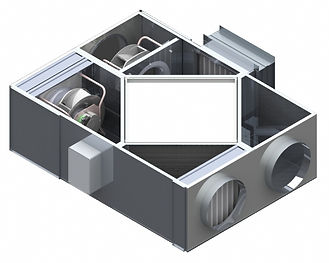
Heat Recovery Devices
Heat recovery unit, Heat recovery is achieved by superimposing the intake exhaust air and fresh supply ventilation, and preheating. In order to create sustainable buildings, energy conversion systems must have high efficiency. In a building, heating-cooling, ventilation systems where energy use is intensive are important in this sense, and the use of heat recovery ventilation systems can contribute to the efficient use of energy. For the thermal performance evaluation of heat recovery ventilation units, equations defined in EN308 and EN13053 such as temperature efficiency, coefficient of performance, thermal efficiency, specific fan power are used. Heat exchangers, which are the basic equipment that directly affects efficiency in heat recovery ventilation systems, can be recuperative (plate) or regenerative (rotor). Today's technology allows certain maximum values to be reached for temperature efficiency (according to EN308) in heat recovery ventilation units, depending on the air-to-air heat exchangers used.
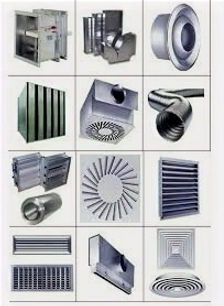
Vent Diffuser Anemostad
Vents are the latest equipment in ventilation and air conditioning systems. Today, air conditioning is an inseparable part of daily life. In the flow of modern life, with technological developments, air conditioning is entering our living spaces more and more frequently every day and the use of air conditioning systems is becoming increasingly widespread in spaces.
In order to provide comfort conditions within the space, the correct selection of these equipments is of great importance for the flawlessness of the system. The distribution of the air given to the environment within the space, the determination of the location and types of vents are among the most important issues of ventilation technique. Research shows that the vast majority of problems related to ventilation systems are caused by vents. It is not possible to set definitive rules for vent selection that are suitable for every situation. Difficulties are encountered especially in spaces with high heating and cooling loads and complex geometric dimensions. It is important that the selection is made by very careful and experienced people. Our company makes the most optimum selection by using sensitive software programs in its projects.


_edited.jpg)
Ventilation Ducts
Generally, ventilation is complementary to other systems. However, the design and application of ventilation systems is a different field of study. The collection of indoor air, replacement of polluted air with fresh air, filtering and cleaning of air, and recovery of heat from exhausted air are the subjects of ventilation. With the developing technology, duct systems have also diversified according to raw materials and manufacturing methods.
GALVANIZED PRISMATIC CHANNELS:
It is the most commonly used channel method and is being produced faster and faster with the development of manufacturing technologies.
STAINLESS CHANNELS:
It is generally used in areas where hygiene is a priority in the food and health sectors. It is more difficult and costly to process than galvanized channels.
DKP (BLACK SHEET) CHANNELS:
They are generally used in the exhaust system of kitchen hoods, they are constructed as welded production, and they are insulated with rock wool.
CLAMPED CHANNELS:
It is created by sewing the strip sheet metal by machine and combining it in oval or round form. It has an application area especially in places where high pressure is needed or where there is no suspended ceiling. Again, it is a more expensive solution compared to galvanized channel.
FLEXIBLE CHANNELS:
While they are directly applied in low static pressure systems, they provide the connection between the main channel and the blowing points in high pressure systems. Due to their flexible structure, they are more suitable for architectural solutions and their application time is much shorter.
POLYURETHANE CHANNELS:
Due to the material's own properties, it has a high insulation capacity. It can be produced even with simple hand tools in places that do not require durability.
TEXTILE CHANNELS:
Although it is used only in blowing lines, it provides great convenience in mono block areas as it does not require distributors such as vents or anemostats and is the channel that can be applied most quickly at high flow rates. Being washable and having color alternatives also expands its area of use.